CLIMATE CHANGE & CLIMATE RESILIENCE
RECOR’s Climate Change Program focuses on strengthening community resilience to climate variability and extreme weather events through adaptation, mitigation, ecosystem restoration, and sustainable livelihood approaches.
Why It Matters
Climate change in Rwanda is causing long-term shifts in temperature and rainfall patterns, with increasing frequency and intensity of extreme weather events such as floods, landslides, and droughts. Over recent decades, rising average temperatures have increased evapotranspiration and placed significant pressure on water resources.
Rainfall has become more unpredictable, resulting in prolonged dry seasons in some regions and intense rainfall in others. These changes have led to frequent floods and landslides, particularly in the Western and Northern Provinces, and recurring droughts in the Eastern Province.
These climate impacts severely affect agriculture, which employs a large share of Rwanda’s population. Crop failures, soil erosion, declining productivity, and land degradation threaten food security, household incomes, and ecosystem stability. Climate change also increases risks to forests, wetlands, water supply systems, public health, and infrastructure.
Despite contributing very little to global greenhouse gas emissions, Rwanda remains highly vulnerable due to its dense population, reliance on rain-fed agriculture, and fragile landscapes. Addressing climate change is therefore essential for safeguarding livelihoods, ecosystems, and sustainable development.
RECOR’s Approach
RECOR contributes to climate change adaptation and mitigation through community-centered and ecosystem-based approaches, including:
- Promoting climate-resilient and climate-smart agriculture
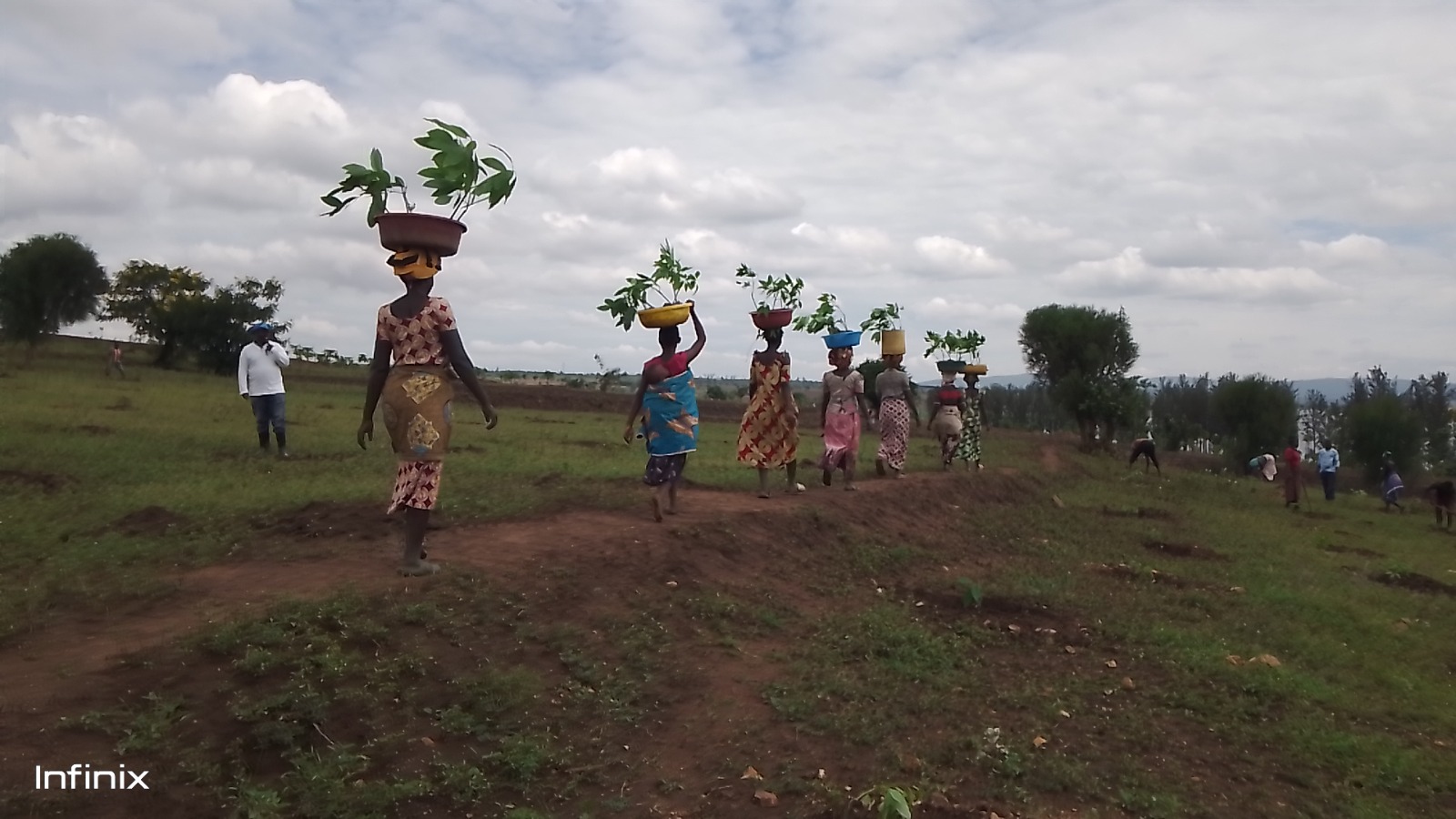
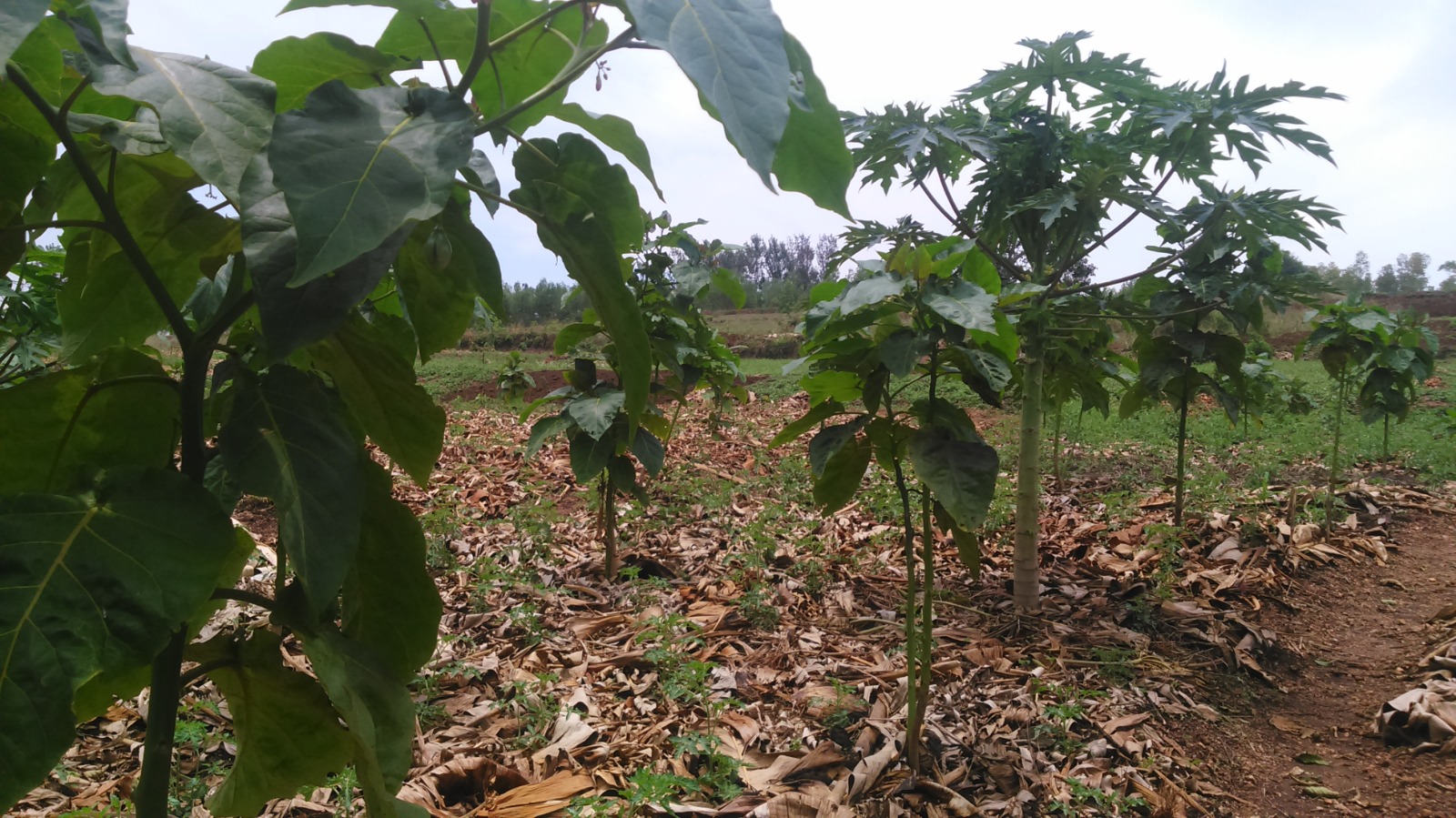
- Supporting forest and landscape restoration on degraded lands
- Strengthening community capacity for climate adaptation planning
- Enhancing water resource protection and climate-resilient WASH systems
- Supporting renewable energy and clean cooking solutions
- Integrating scientific and indigenous knowledge for climate resilience
- Encouraging inclusive participation of women, youth, and vulnerable groups
Objectives
- Strengthen community resilience and adaptive capacity
Enhance the ability of households and communities to anticipate, cope with, and recover from climate-related shocks such as floods, droughts, and landslides. - Promote climate-resilient agriculture and food security
Support climate-smart agriculture, improved seed varieties, soil and water conservation, and sustainable livestock systems to ensure stable food production and incomes. - Restore and sustainably manage ecosystems
Protect and restore forests, wetlands, watersheds, and degraded landscapes to enhance ecosystem services, reduce disaster risks, and support biodiversity. - Reduce climate-related disaster risks
Strengthen early warning systems, climate information services, and climate-resilient infrastructure to minimize loss of lives, assets, and livelihoods. - Improve water security and climate-resilient WASH services
Contribute to sustainable access to safe water and sanitation through protection of water sources, resilient infrastructure, and efficient water use. - Support low-carbon and renewable energy solutions
Expand renewable energy and clean cooking technologies to reduce greenhouse gas emissions while improving energy access and resilience. - Enhance community capacity
Build the capacity of communities to plan, implement, and monitor climate-resilient actions. - Promote inclusive and gender-responsive approaches
Ensure women, youth, and vulnerable groups actively participate in and benefit from climate resilience initiatives. - Strengthen community climate finance and investment
Mobilize community-based climate finance to support local adaptation, mitigation, and resilience-building programs. - Advocate for climate mainstreaming in development planning
Integrate climate risk considerations into national, sectoral, and local development plans to ensure long-term sustainability.
Alignment
This program aligns with national and global frameworks, including:
- Vision 2050
- National Strategy for Transformation (NST2)
- Rwanda’s Nationally Determined Contribution (NDC)
- Green Growth and Climate Resilience Strategy
- Sustainable Development Goals (SDGs):
- SDG 1 – No Poverty
- SDG 2 – Zero Hunger
- SDG 6 – Clean Water and Sanitation
- SDG 7 – Affordable and Clean Energy
- SDG 13 – Climate Action
- SDG 15 – Life on Land